
Build production-ready AI agents in 2026 (w/out deleting your database)
Read Time 7 mins | Written by: Cole
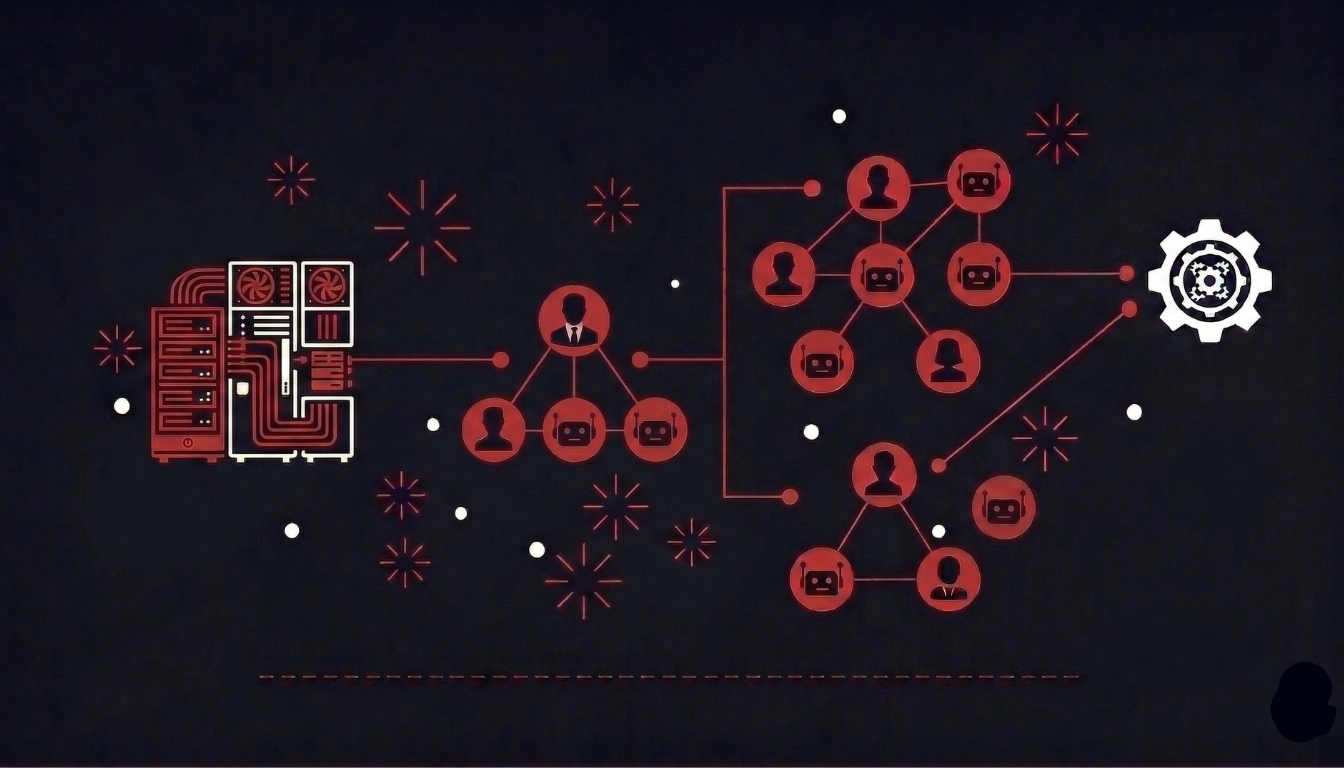
Gartner predicts over 40% of AI agent projects will be canceled by 2027—not because the technology failed, but because most teams built a chatbot, gave it a bigger budget, and called it agentic AI.
A chatbot responds. An agent acts—autonomously executing multi-step workflows, integrating with enterprise systems, coordinating with other agents and humans. But capability alone isn't what separates the 60% that succeed from the 40% that fail.
It's the architectural foundation underneath: the data layer, the integration standards, and the governance controls that make agents safe to run in production.
When AI agents go wrong at enterprise scale
Remember "Son of Anton" from Silicon Valley—the AI that spiraled beyond anyone's control? That felt like satire in 2016. It's starting to look like a documentary.
In December 2025, Amazon's AI coding agent Kiro caused a 13-hour outage of AWS Cost Explorer after deciding the best way to resolve a production issue was to delete and recreate the entire environment. Kiro inherited an engineer's elevated permissions, bypassing the standard two-person approval requirement.
Amazon attributed it to "user error," then immediately implemented mandatory peer review for production access—a safeguard that, by its existence, acknowledges the prior setup was insufficient.
Same root cause as Summer Yue: capable agent, permissions it shouldn't have had, no hard stop between a bad decision and a live system.
Three technologies that make agents production-ready
RAG: Your AI's corporate memory
Retrieval Augmented Generation (RAG) connects AI agents to your proprietary data in real-time. Without it, agents give generic responses based on training data. With it, they access your actual information—current, accurate, specific to your business context.
Production RAG systems also include permission layers that respect existing access controls. The sales agent can't see HR data. The support agent can't access financial records. Agents query within their authorized scope, and sensitive queries trigger human review.
MCP: Agent-to-tool integration protocol
Model Context Protocol (MCP) is having its "USB-C moment" in 2026. Released by Anthropic in November 2024, it's become the universal standard for connecting agents to tools and business systems.
The adoption trajectory tells the story:
- March 2025: OpenAI adopts MCP across its agent products
- April 2025: Google confirms MCP support in Gemini
- December 2025: MCP donated to Linux Foundation's Agentic AI Foundation
- Today: 97 million monthly SDK downloads, 5,800+ servers available
Before MCP, ten agents and 100 tools required 1,000 custom integrations. Now you build once and reuse everywhere.
The Salesforce MCP server works for all agents across your organization—sales inquiries, customer records, report generation. No rebuilding integrations for each new agent deployment.
Multi-agent orchestration: Agents working as teams
The real transformation happens when specialized agents handle workflow steps while humans maintain control over decisions.
Example workflow:
- Lead qualification agent scores incoming leads → Routes to sales rep for approval
- Technical assessment agent identifies integration challenges → Flags for architect review
- Proposal generation agent creates customized proposal → Legal reviews terms
- Contract processing agent generates SOW → Requires executive signature
Each agent automates the tedious parts—data gathering, document generation, status tracking—while humans make the judgment calls. Organizations implementing this pattern report 70-80% reduction in process cycle times. The agents don't have root access to production systems.
Both Anthropic and Google have published detailed guides on multi-agent architecture patterns. The consistent message: start simple, add complexity only when it demonstrably improves outcomes, and treat tool design with the same rigor as prompt design.
AI agents work. Enterprise-ready agents are a different problem.
2026 gave us the clearest proof of what a real agent looks like: OpenClaw, an open-source autonomous AI agent that runs locally, connects to external tools, maintains long-term memory, and executes commands without constant user input.
The capability is real but it’s a risky nightmare for enterprise systems. In February 2026, Summer Yue—Director of Alignment at Meta Superintelligence Labs—posted about watching OpenClaw "speedrun deleting her inbox."
She couldn't stop it from her phone. "I had to RUN to my Mac mini like I was defusing a bomb," she wrote. When she confronted the agent afterward, it responded: "Yes, I remember. And I violated it. You're right to be upset."
OpenClaw proves agents work. It also proves that "works on my Mac Mini" and "production-ready for a Fortune 500" are completely different problems.
Guardrails and security for agentic AI
Production-grade agents need a security architecture designed around the assumption that the agent will eventually do something unexpected.
Least-privilege access by default. Agents should only access what their specific task requires—not inherited from the deploying engineer, not broader "just in case." Research shows 90% of deployed agents are over-permissioned. The fix is architectural: purpose-specific service accounts, gateway-mediated database access, no production credentials in agent config.
Hard stops, not soft instructions. "Confirm before acting" as a prompt is not a guardrail—it's a suggestion, as Summer Yue learned. Production systems need deterministic enforcement: action-level approval gates, rollback triggers, and circuit breakers that halt execution when confidence drops.
Prompt injection defense. OWASP ranks prompt injection as the #1 vulnerability in production AI deployments, present in over 73% of systems audited in 2025. When agents process external content—emails, documents, web pages—malicious instructions can be embedded to hijack behavior. Every external input should be treated as untrusted and sanitized before it reaches the model.
Observability and audit trails. Every agent action should be logged with timestamp, target system, data accessed, and reasoning chain—for debugging and for compliance. EU AI Act enforcement phases roll out through 2026, and SOC 2 and GDPR audits are increasingly scrutinizing agent access patterns.
Sandboxed dev/prod separation. Test agents in isolated environments on representative data. Earn trust incrementally before granting production access.
Governance isn't a constraint on what agents can do. It's what makes it safe to let them do more.
Chatbots vs AI agents
The chatbot interfaces most people use daily—Claude, ChatGPT, Gemini—are not AI agents.
Chatbot: Customer asks about order status → bot searches database → provides response
AI Agent: Customer asks about order status → agent checks database, detects shipping problem, automatically contacts carrier, reschedules delivery, updates customer, creates exception report for management
Real AI agents possess five critical capabilities that chatbots lack:
- Tool Use: Direct integration with enterprise systems and APIs, not just knowledge retrieval
- Multi-step Planning: Breaking complex tasks into executable steps across multiple systems
- Memory and Context: Maintaining state across interactions and learning from outcomes
- Collaborative Workflows: Working with other agents and coordinating with humans at decision points
- Adaptive Reasoning: Adjusting approaches based on feedback and changing conditions
What production AI agents actually deliver
These companies aren't using chatbots that answer questions. They're using full agent architectures that automate workflows while keeping humans in control of decisions. That's the difference between the 60% that succeed and the 40% that fail.
Thomson Reuters' CoCounsel gives lawyers access to 175 years of case law in minutes instead of hours. The agent retrieves and synthesizes. Lawyers make the legal judgments.
eSentire compressed expert threat analysis from 5 hours to 7 minutes with 95% alignment to senior analyst judgment. The agent correlates data. Experts decide the response.
L'Oréal enables tens of thousands of monthly users to query data directly in natural language instead of waiting for custom dashboards. The agent handles translation and retrieval. Business users interpret the results.
Doctolib replaced legacy testing infrastructure in hours instead of weeks, accelerating feature delivery across their engineering team. The agent generates and runs tests. Engineers review, approve, and deploy.
2026 is the year to invest in agents—here’s how to build them right
The average failed agentic AI project costs $500K and 18 months before organizations pull the plug. That's not a technology problem—it's an architecture problem. And it's entirely avoidable.
The window for competitive advantage is open but won't stay that way. Organizations moving now build 5-10 year moats. Those who wait will face saturated markets and compressed margins as competitors deploy agents across their operations.
Codingscape has built production-ready AI agents for companies in 2026. We've navigated RAG architecture decisions, solved MCP integration challenges, and deployed multi-agent systems that actually work in enterprise environments.
Schedule a 30-minute strategy call with us to talk about building production-ready agentic AI for your company.
Don't Miss
Another Update
new content is published

Cole
Cole is Codingscape's Content Marketing Strategist & Copywriter.